
Synergy of Digital Technology and Green Finance in Promoting an Inclusive Green Economy: A Strategic Review towards Sustainable Humanity in the Asia-Pacific
Authors
-
 Eny Latifah
Institut Agama Islam Tarbiyatut Tholabah Lamongan, Indonesia
Keywords:
Strategy, Green Economy, Sustainable, TechnologyAbstract
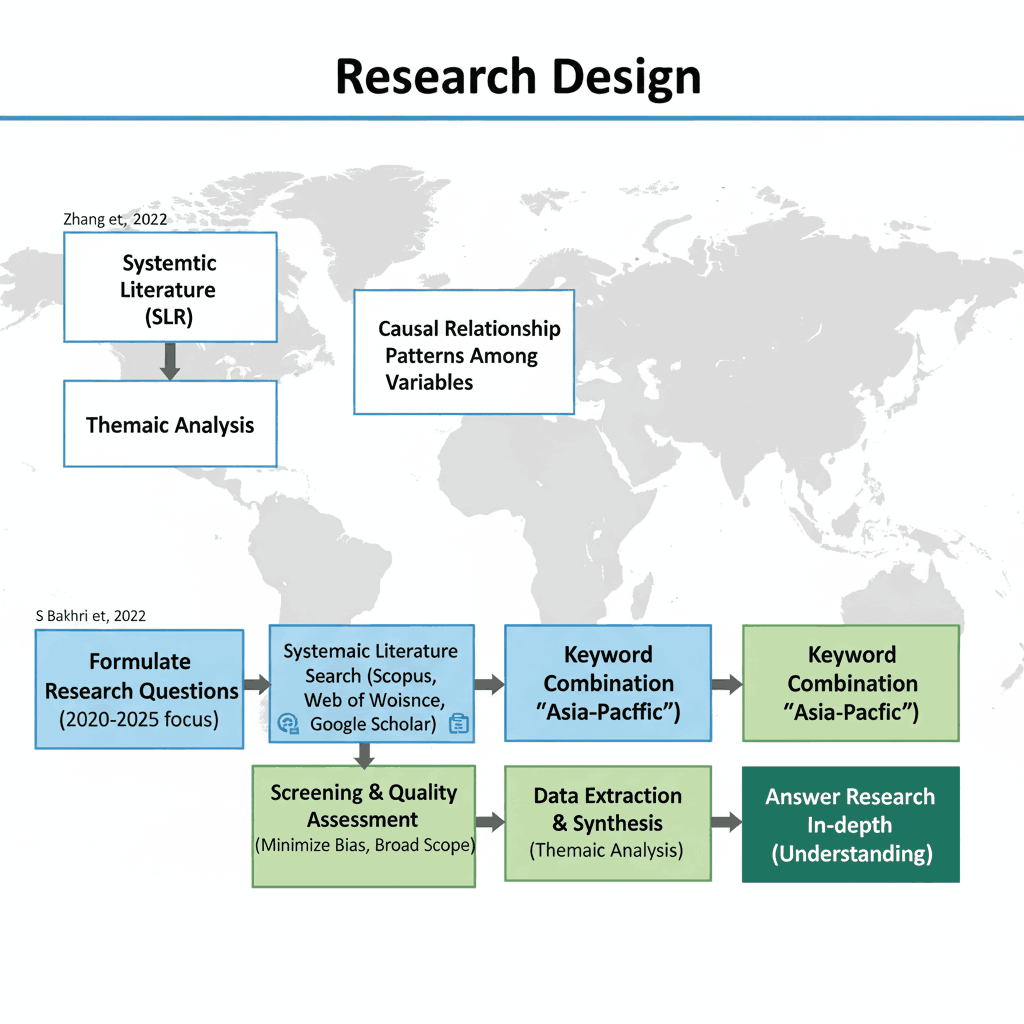
Background: The transition to a green economy is a global imperative aimed at improving human well-being while minimizing environmental risks and resource scarcity. While technology is recognized as a key enabler, implementing equitable and sustainable green economy strategies requires a contextual understanding of regional dynamics, particularly among the conference's participating countries (Indonesia, Australia, Malaysia, and Brunei). Objective: This study aims to analyze and compare the role of technology (such as Green Technology, Digitalization, and Green Finance) in promoting an inclusive and sustainable green economy agenda, and to identify collective strategies among the four countries in the context of Humanity, Sustainability, and Technology. Methods: We used a Systematic Literature Review approach by collecting and synthesizing academic publications and official policy documents published in the past five years (2020–2025), with an explicit focus on the regional context and the BIMP-EAGA policy framework. Results: Findings indicate that successful technology adoption in the region is highly dependent on strengthening green infrastructure and the availability of green finance policies oriented towards social inclusion. The main difference lies in the policy focus: Indonesia and Malaysia emphasize the digital transition and renewable energy, while Australia focuses on innovation and partnerships. Conclusion: Technology integration in green economy strategies must be explicitly guided by the principle of humanity, which ensures that this transition is just and equitable, particularly through human resource capacity development and equitable digital access across ASEAN countries.
Downloads
References
Adomako, S., & Tran, M. D. (2024). Exploring the effect of R&D support, green technology transfer, sustainable innovation. Sustainable Development, 32(5), 4758–4769.
Affandi, G. N., Berlianti, P. C. G., Ramadhania, N. R., Abi Shawaaba, R. S., & Radianto, D. O. (2024). Efektivitas Pengolahan Limbah Fisik (Padat Dan Cair) Dengan Menggunakan Teknologi Inovatif. Jurnal Wilayah, Kota Dan Lingkungan Berkelanjutan, 3(1), 84–98.
Aisbett, E., Raynal, W., Steinhauser, R., & Jones, B. (2023). International green economy collaborations: Chasing mutual gains in the energy transition. Energy Research & Social Science, 104, 103249.
Al-Abbadi, L. H., Alshawabkeh, R., Alkhazali, Z., Al-Aqrabawi, R., & Rumman, A. A. (2025). Business intelligence and strategic entrepreneurship for sustainable development goals (sdgs) through:(green technology innovation and green knowledge management). Economics-Innovative and Economics Research Journal, 13(1), 45–68.
Al‐Raeei, M. (2025). The smart future for sustainable development: Artificial intelligence solutions for sustainable urbanization. Sustainable Development, 33(1), 508–517.
Barbier, E. B. (2016). Building the green economy. Canadian Public Policy, 42(s1), S1–S9.
Bian, J., & Guo, X. (2022). Policy analysis for emission-reduction with green technology investment in manufacturing. Annals of Operations Research, 316(1), 5–32.
Billatos, S. (1997). Green technology and design for the environment. CRC Press.
Booth, A., Martyn-St James, M., Clowes, M., & Sutton, A. (2021). Systematic approaches to a successful literature review.
Brocke, J. vom, Simons, A., Niehaves, B., Niehaves, B., Riemer, K., Plattfaut, R., & Cleven, A. (2009). Reconstructing the giant: On the importance of rigour in documenting the literature search process.
Cheng, P., Wang, X., Choi, B., & Huan, X. (2023). Green finance, international technology spillover and green technology innovation: A new perspective of regional innovation capability. Sustainability, 15(2), 1112.
Comin, L. C., Aguiar, C. C., Sehnem, S., Yusliza, M.-Y., Cazella, C. F., & Julkovski, D. J. (2020). Sustainable business models: A literature review. Benchmarking: An International Journal, 27(7), 2028–2047.
Cooper, H. M. (1988). Organizing knowledge syntheses: A taxonomy of literature reviews. Knowledge in Society, 1(1), 104.
Dabbous, A., & Barakat, K. A. (2023). The road towards environmental sustainability: Investigating the role of information and communication technologies and green technology innovations. Journal of Cleaner Production, 432, 139826.
Dzwigol, H., Kwilinski, A., Lyulyov, O., & Pimonenko, T. (2023). The role of environmental regulations, renewable energy, and energy efficiency in finding the path to green economic growth. Energies, 16(7), 3090.
Eshbayev, O., Xursandov, K., Pulatovna, K. U., Sitora, A., & Jamalova, G. (2024). Advancing green technology systems through digital economy innovations: A study on sustainable. 576, 02009.
Feng, S., Zhang, R., & Li, G. (2022). Environmental decentralization, digital finance and green technology innovation. Structural Change and Economic Dynamics, 61, 70–83.
Gibbs, D., & O’Neill, K. (2015). Building a green economy? Sustainability transitions in the UK building sector. Geoforum, 59, 133–141.
Guo, M., Nowakowska-Grunt, J., Gorbanyov, V., & Egorova, M. (2020). Green technology and sustainable development: Assessment and green growth frameworks. Sustainability, 12(16), 6571.
Hadi, L., Kuswanto, W., Tarmudi, I., & Mukhlisin, M. (2024). Keanekaragaman hayati: Merawat alam, menjaga keseimbangan. Indigo Media.
Hanna, E., & Comín, F. A. (2021). Urban green infrastructure and sustainable development: A review. Sustainability, 13(20), 11498.
Houssam, N., Ibrahiem, D. M., Sucharita, S., El-Aasar, K. M., Esily, R. R., & Sethi, N. (2023). Assessing the role of green economy on sustainable development in developing countries. Heliyon, 9(6).
Immadisetty, A. (2024). Sustainable innovation in digital technologies: A systematic review of energy-efficient computing and circular design practices. International Journal of Computer Engineering And Technology, 15(06), 1056–1066.
Irsa, M. J. (2025). Analysis of Telkom Five Bold Moves and Telkom Go Zero% Strategy on Business Sustainability of PT Telkom Indonesia (Tbk) in the Digital Business Era. Formosa Journal of Applied Sciences, 4(5), 1459–1466.
Khalid, S., Stecenko, I., Kadirova, Z., Nurieva, A., & Gazieva, S. (2023). Sustainable development goals through the triad of green economy, growth, and deal. 21, 1376–1385.
Khan, N., Ray, R. L., Sargani, G. R., Ihtisham, M., Khayyam, M., & Ismail, S. (2021). Current progress and future prospects of agriculture technology: Gateway to sustainable agriculture. Sustainability, 13(9), 4883.
Krajnc, D., Kovačič, D., Žunec, E., Brglez, K., & Kovačič Lukman, R. (2022). Youth awareness and attitudes towards a circular economy to achieve the green deal goals. Sustainability, 14(19), 12050.
Kwilinski, A., Lyulyov, O., & Pimonenko, T. (2023). Environmental sustainability within attaining sustainable development goals: The role of digitalization and the transport sector. Sustainability, 15(14), 11282.
Lasut, E. B. (2024). Analisis Kebijakan Indonesia Terkait Emisi Karbon Melalui Carbon Offsetting and Reduction Scheme for International Aviation (CORSIA).
Lee, C.-C., Wang, C., He, Z., Xing, W., & Wang, K. (2023). How does green finance affect energy efficiency? The role of green technology innovation and energy structure. Renewable Energy, 219, 119417.
Lei, L., & Lazareva, E. I. (2024). Financial incentive instruments of regional economy’«green» transformation. Государственное и Муниципальное Управление. Ученые Записки, 3, 78–85.
Liu, Y., Yang, Y., Zhang, X., & Yang, Y. (2024). The impact of technological innovation on the green digital economy and development strategies. Plos One, 19(4), e0301051.
Lu, M., Daixu, L., Peng, W., & Ruiqi, M. (2023). Heterogeneous environmental regulation tools and green economy development: Evidence from China. Environmental Research Communications, 5(1), 015007.
Luo, Y. (2020). Research on the development of economic transformation green agriculture based on sustainable environment green technology. International Journal of Environmental Technology and Management, 23(2–4), 91–100.
Muarif, I. (2025). Implementasi kebijakan ekonomi hijau pada pertumbuhan ekonomi dan kesejahteraan masyarakat. Jurnal Akuntansi, Keuangan, Perpajakan Dan Tata Kelola Perusahaan, 2(3), 961–967.
Pan, S.-Y., Gao, M., Kim, H., Shah, K. J., Pei, S.-L., & Chiang, P.-C. (2018). Advances and challenges in sustainable tourism toward a green economy. Science of the Total Environment, 635, 452–469.
Phan, T. C. (2024). Impact of green investments, green economic growth and renewable energy consumption on environmental, social, and governance practices to achieve the sustainable development goals: A sectoral analysis in the ASEAN economies. International Journal of Engineering Business Management, 16, 18479790241231725.
Putri, A., & Sari, N. (2024). Pembangunan Ekonomi Syariah: Peran Pembangunan Berkelanjutan Berbasis Ekonomi Hijau. Religion: Jurnal Agama, Sosial, Dan Budaya, 3(2), 401–408.
Rhodes, E. A. (2011). Literature reviews. The Volta Review, 111(1), 67–71.
Ritterbusch, G. D., & Teichmann, M. R. (2023). Defining the metaverse: A systematic literature review. Ieee Access, 11, 12368–12377.
Rydzewski, P. (2025). Digital inequality and sustainable development. Problemy Ekorozwoju, 20(1), 96–108.
Sethi, L., Behera, B., & Sethi, N. (2024). Do green finance, green technology innovation, and institutional quality help achieve environmental sustainability? Evidence from the developing economies. Sustainable Development, 32(3), 2709–2723.
Söderholm, P. (2020). The green economy transition: The challenges of technological change for sustainability. Sustainable Earth, 3(1), 6.
Song, A., Rasool, Z., Nazar, R., & Anser, M. K. (2024). Towards a greener future: How green technology innovation and energy efficiency are transforming sustainability. Energy, 290, 129891.
Subrahmanyam, S. (2025). Developing Green Skills for Sustainable Careers. In Integrating AI and Sustainability in Technical and Vocational Education and Training (TVET) (pp. 101–126). IGI Global Scientific Publishing.
Sungkawati, E. (2024). Opportunities and challenges: Adopting “blue-green economy” terms to achieve SDGs. Revenue Journal: Management and Entrepreneurship, 2(1), 01–13.
Susanto, S., Rahmawaty, F., & Siswanto, E. (2025). Penerapan teknologi green water IPAL dalam peningkatan kualitas sanitasi dan kesehatan lingkungan untuk pemberdayaan komunitas perkotaan. Jurnal Pembelajaran Pemberdayaan Masyarakat (JP2M), 6(3), 772–785.
Tahir, U., & Babar, H. (2024). The Role of Policy in Developing a Skilled Workforce for a Green Economy. Green Environmental Technology, 1(2), 78–87.
Tanveer, M., Khan, S. A. R., Umar, M., Yu, Z., Sajid, M. J., & Haq, I. U. (2022). Waste management and green technology: Future trends in circular economy leading towards environmental sustainability. Environmental Science and Pollution Research, 29(53), 80161–80178.
Usmani, M. S., Wang, J., Ahmad, N., Iqbal, M., & Ahmed, R. I. (2021). Mapping green technologies literature published between 1995 and 2019: A scientometric review from the perspective of the manufacturing industry. Environmental Science and Pollution Research, 28(23), 28848–28864.
Wang, M., Zhu, C., Wang, X., Ntim, V. S., & Liu, X. (2023). Effect of information and communication technology and electricity consumption on green total factor productivity. Applied Energy, 347, 121366.
Wang, Q., Qu, J., Wang, B., Wang, P., & Yang, T. (2019). Green technology innovation development in China in 1990–2015. Science of the Total Environment, 696, 134008.
Wani, M. J. G., Loganathan, N., & Esmail, H. A. H. (2024). Impact of green technology and energy on green economic growth: Role of FDI and globalization in G7 economies. Future Business Journal, 10(1), 43.
Yikun, Z., Leong, L. W., Abu-Rumman, A., Shraah, A. A., & Hishan, S. S. (2023). Green growth, governance, and green technology innovation. How effective towards SDGs in G7 countries? Economic Research-Ekonomska Istraživanja, 36(2).
Yin, S., Zhang, N., & Li, B. (2020). Enhancing the competitiveness of multi-agent cooperation for green manufacturing in China: An empirical study of the measure of green technology innovation capabilities and their influencing factors. Sustainable Production and Consumption, 23, 63–76.
Ying, J., Zhang, X., Zhang, Y., & Bilan, S. (2022). Green infrastructure: Systematic literature review. Economic Research-Ekonomska Istraživanja, 35(1), 343–366.
Younas, S., Shoukat, S., Awan, A., & Arslan, S. M. (2023). Comparing effects of green innovation and renewable energy on green economy: The metrics of green economy as nucleus of SDGs. Pakistan Journal of Humanities and Social Sciences, 11(2), 1035–1051.
Zakari, A., Khan, I., Tan, D., Alvarado, R., & Dagar, V. (2022). Energy efficiency and sustainable development goals (SDGs). Energy, 239, 122365.
Zhang, L., Saydaliev, H. B., & Ma, X. (2022). Does green finance investment and technological innovation improve renewable energy efficiency and sustainable development goals. Renewable Energy, 193, 991–1000.
Zhironkin, S., & Cehlár, M. (2022). Green economy and sustainable development: The outlook. Energies, 15(3), 1167.
Zioło, M., Bąk, I., Cheba, K., & Spoz, A. (2020). Sustainable business models of enterprises-actual and declared activities for ensuring corporate sustainability. Procedia Computer Science, 176, 1497–1506.
Published
How to Cite
Conference Proceedings Volume
Section
License
Copyright (c) 2025 Proceeding of the Excellent Campus and Technology Conference

This work is licensed under a Creative Commons Attribution-ShareAlike 4.0 International License.





